Ngelawang: Bali's Barong Procession That Chases Away Evil Spirits
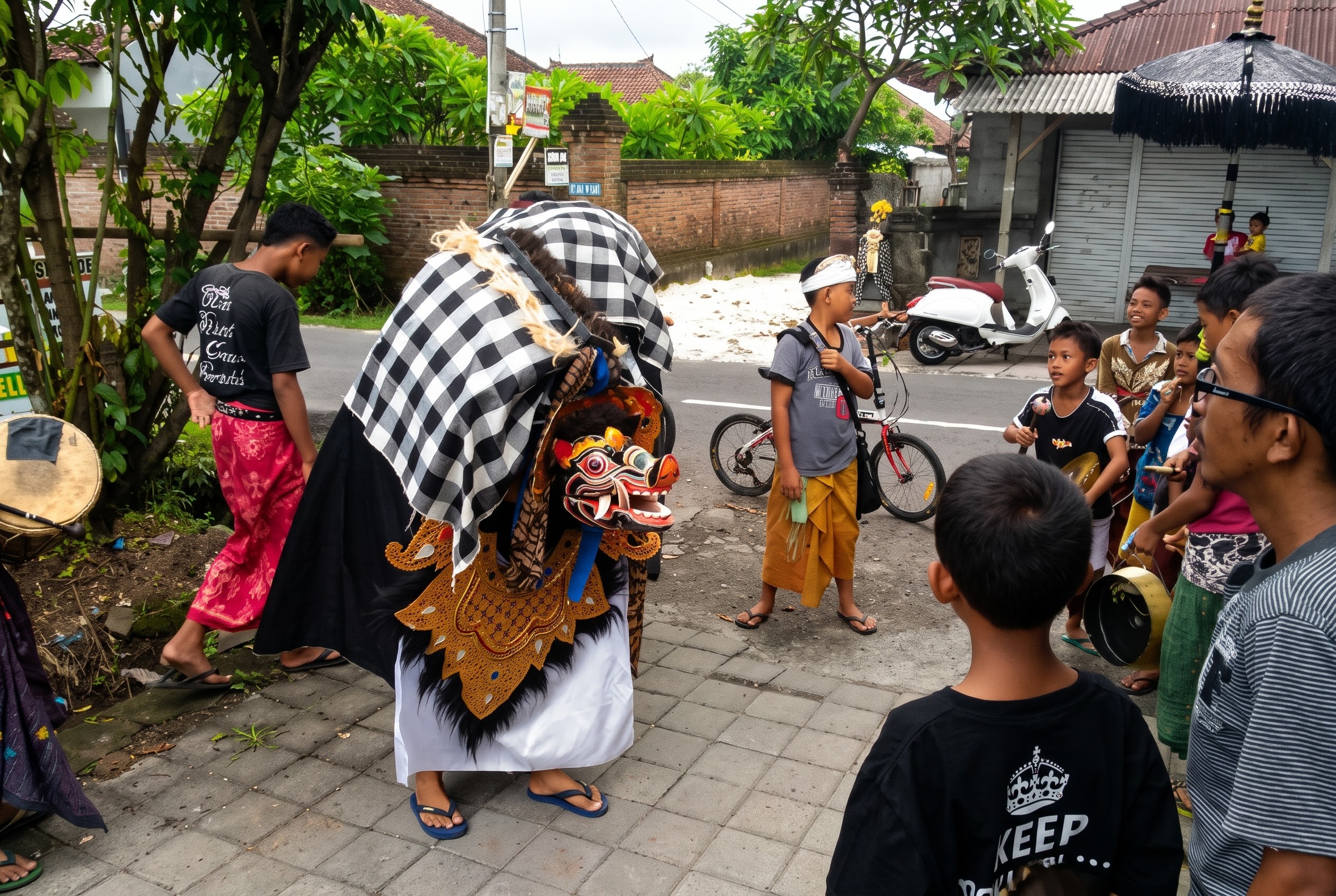
If you are traveling in Bali shortly after Galungan, you may encounter a lively and slightly chaotic parade moving from house to house. A group of children carries a Barong—a lion-like or pig-like mask—while a small gamelan ensemble plays energetic music. This is Ngelawang, one of Bali's most charming and spiritually significant traditions.
What is Ngelawang?
Ngelawang is a tradition of performing the Barong dance around the village, moving from door to door. The word itself comes from lawang, which means "door" in Balinese, referring to how the performers visit homes and pass through gateways. During the performance, two people animate the Barong—one controlling the head and the other the tail—while a group of children plays traditional gamelan instruments like kendang, cengceng, and gong.
Historically, Ngelawang was a sacred ritual where consecrated Barong and Rangda objects were carried around the village to provide spiritual protection. Residents would eagerly collect fallen Barong fur, believing it possessed healing properties or served as a lucky charm. Over time, the tradition evolved, and today the performances often use replica Barong masks and are performed by children, transforming it into a form of community entertainment that still retains its spiritual essence.
The History and Function of Ngelawang
The origins of Ngelawang can be traced back to Balinese Hindu mythology. According to the Lontar Barong Swari, Lord Shiva once cursed the goddess Dewi Uma to descend to earth as Dewi Durga. While meditating, she inadvertently unleashed various plagues upon the world. To counter this, the Hindu trinity (Brahma, Vishnu, and Shiva) descended in different forms—Topeng Bang, Telek, and Barong—to neutralize the negative forces and restore balance.
The primary function of Ngelawang is tolak bala (warding off misfortune) and pengeruwat jagat (neutralizing negative energies in the environment). The presence of the Barong, considered a manifestation of divine protective power, is believed to purify the village and drive away bhuta kala (evil spirits) that bring disease or disaster. In essence, Ngelawang transforms negative forces into positive ones, ensuring the community's safety and well-being.
When is Ngelawang Performed?
Ngelawang is most commonly performed during the Galungan and Kuningan holiday period, which lasts for ten days every 210 days on the Balinese Pawukon calendar. However, according to cultural experts, the tradition can actually be performed from Galungan until Buda Kliwon Pahang, which falls 35 days after Galungan. This period is known as Rahinan Jagat, a sacred time for the earth that must be filled with religious rituals and communal celebrations.
In some communities, Ngelawang is also performed at other times when a village feels the need to ward off epidemics or misfortune.
Why Are Children the Main Performers?
One of the most endearing aspects of Ngelawang is that it is predominantly performed by children. A typical group consists of 8 to 15 children, with two acting as the Barong dancers and the rest playing gamelan instruments. This is not a coincidence but a deliberate cultural strategy. By involving children in Ngelawang, the community ensures that the younger generation learns about their cultural heritage, spiritual values, and the importance of teamwork from an early age.
For the children, Ngelawang is a joyful activity that combines play, artistic expression, and community bonding. It fosters solidarity and pride in their cultural identity. The tradition also serves as a gentle introduction to the spiritual responsibilities they will carry as adults.
Why is Ngelawang Performed After Galungan?
Galungan celebrates the victory of Dharma (good) over Adharma (evil). It is a time when ancestral spirits return to visit the earth, and the entire island is in a state of spiritual celebration. Ngelawang serves as a natural extension of this victory. By performing the Barong procession after Galungan, the community symbolically reinforces the triumph of good by actively cleansing the village of any lingering negative energies.
The ten-day period between Galungan and Kuningan is considered especially sacred. During this window, the presence of Barong moving from house to house amplifies the spiritual purification, ensuring that the blessings of Galungan are fully realized and the village is protected until the next cycle.
Experience Bali's Living Culture with Diwira Travel. If your visit coincides with Galungan or Kuningan, our local guides can help you witness Ngelawang respectfully and understand its deep meaning. Explore our Bali Tour Packages for a truly immersive cultural journey.