Banten Gebogan: The Majestic Fruit Offering of Bali
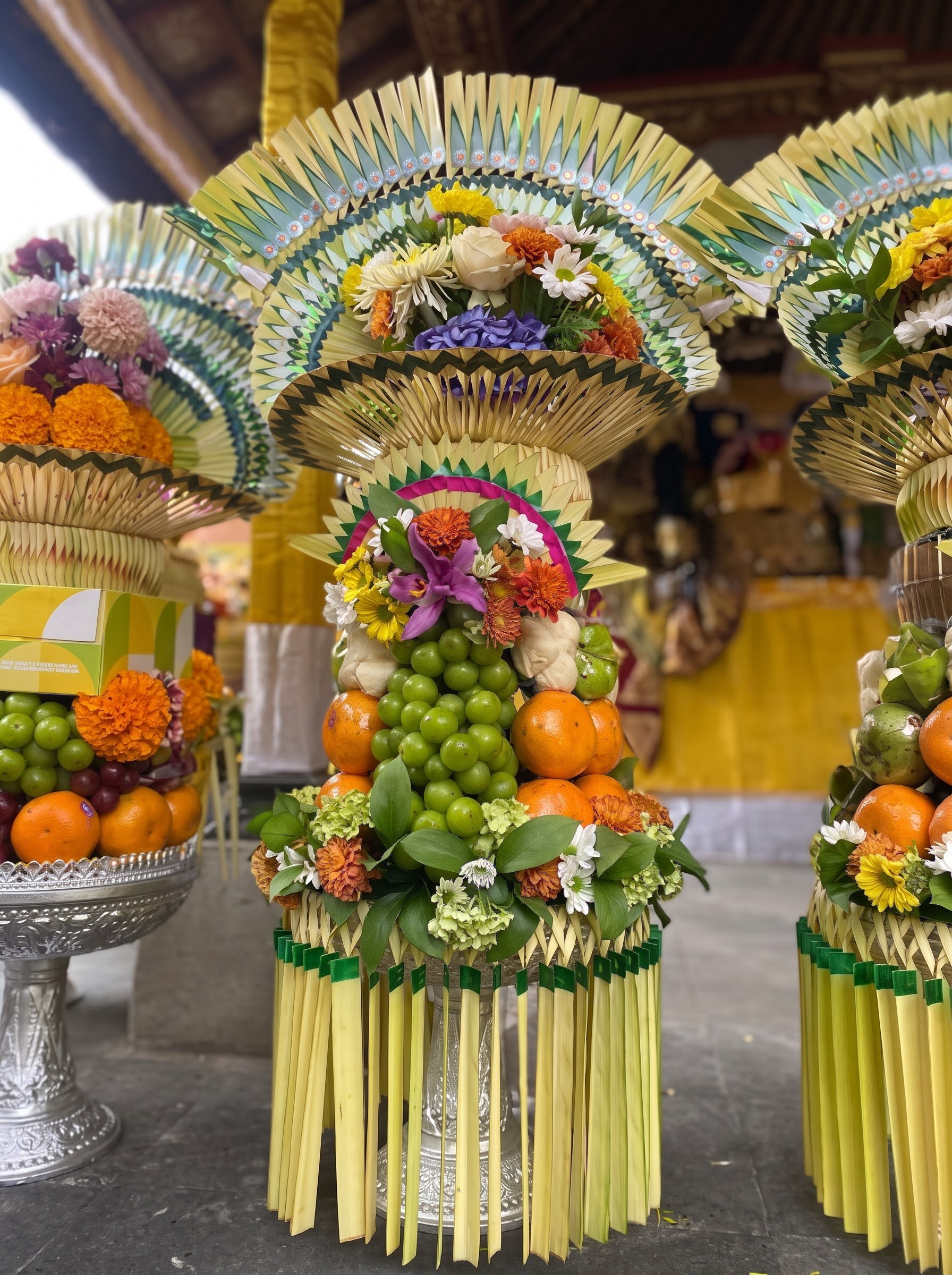
If you have ever witnessed a Balinese temple ceremony or a traditional wedding, you have likely seen women gracefully carrying towering, colorful arrangements of fruit on their heads. These spectacular creations are called Banten Gebogan. More than just a stunning visual display, Gebogan is a profound expression of gratitude, artistic skill, and spiritual devotion. Here is everything you need to know about this magnificent offering.
What is Banten Gebogan?
Banten Gebogan is a type of Balinese Hindu offering made primarily from fresh fruits, arranged in a towering, cone-like structure. The fruits are beautifully stacked and secured onto a banana tree trunk (gedebong) or a wooden base, often decorated with intricately carved palm leaves and flowers at the top. The sheer height and vibrant colors of the Gebogan are meant to represent the majesty and abundance of God's creation, serving as a visual prayer of thanks for the harvest and life's blessings.
The Function of Banten Gebogan
The primary function of Gebogan is to express Atma Yadnya or Bhakti—a deep devotion and gratitude to Ida Sang Hyang Widhi Wasa (God Almighty). By offering the best of their harvest, the Balinese are essentially returning the essence of the earth back to the divine. Gebogan also symbolizes harmony and the cycle of life, reminding the community that all wealth and sustenance ultimately come from the universe.
In a social context, the making and carrying of Gebogan foster a strong sense of community. Women often work together for days to prepare the offerings, and the procession of women carrying Gebogan to the temple is a beautiful display of unity and shared faith.
Why and When is it Presented?
Gebogan is typically presented during major religious ceremonies, such as temple anniversaries (Odalan), weddings, and Manusa Yadnya (rites of passage for humans). It is also commonly offered during Purnama (full moon) and Tilem (new moon) ceremonies.
Additionally, you will frequently see Gebogan at traditional Balinese weddings. The groom's family typically presents a grand Gebogan to the bride's family as a symbol of their readiness to provide for and sustain the new household. The height and grandeur of the Gebogan often reflect the family's gratitude and social standing.
What Are the Ingredients?
The making of a Gebogan is an art form that requires patience and precision. The core components include:
- Fruits: A variety of seasonal fruits such as apples, salak (snake fruit), bananas, oranges, grapes, and mangoes. The selection is often based on color and size to create a beautiful gradient.
- Gedebong (Banana Trunk): The central pillar that holds the structure together.
- Janur (Young Coconut Leaves): Woven into decorative shapes and used to secure the fruits.
- Flowers and Leaves: Frangipani (jepun) flowers, pandan leaves, and other greenery are placed at the top and between the fruits for fragrance and aesthetic appeal.
- Incense and Holy Water: Placed at the very top to complete the spiritual offering.
The Cost of Making Banten Gebogan
The cost of making a Gebogan varies widely depending on the size, the type of fruits used, and whether it is made at home or purchased ready-made. A small, simple Gebogan might cost around IDR 150,000 to IDR 300,000, while a large, elaborate one for a wedding or major temple ceremony can cost upwards of IDR 1,000,000 to IDR 2,500,000. The cost is primarily driven by the price of fruits, which can fluctuate significantly, especially during major holidays when demand is high.
Witness the Beauty of Bali's Offerings. If you want to see these magnificent Gebogan in person and understand the culture behind them, Diwira Travel offers authentic cultural tours. Visit traditional villages and witness the creation of these beautiful offerings. Explore our Bali Tour Packages for a truly immersive journey.